Showing 1 to 24 of 879 total
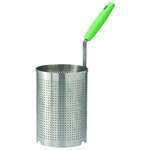
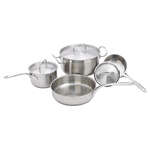
$35.99/Item

$35.99/Item
Commercial kitchen output depends on having reliable cooking vessels that distribute heat evenly, withstand constant high-temperature use, and survive the physical demands of busy service periods. Pots and pans in professional settings endure treatment that would destroy residential cookware within weeks — direct flame exposure, rapid temperature changes, metal utensil contact, and aggressive cleaning cycles.
Admiral Craft Equipment, Clipper Mill, PacknWood, Thunder Group, Winco, and C.A.C. manufacture cookware at McDonald Paper & Restaurant Supplies engineered specifically to handle the punishment of high-volume restaurant operations.
Cooking pot and pan materials each bring distinct advantages to different applications:
Stainless steel — resists corrosion and maintains appearance through years of use, requires thick aluminum cores for even heat distribution.
Aluminum — heats quickly and distributes temperature uniformly, ideal for sauces and careful preparations.
Cast iron — retains heat exceptionally well for searing and frying, though its weight limits mobility.
Carbon steel — combines light weight with excellent heat retention, and develops a natural non-stick patina over time.
Cooking pan selection should match your kitchen's primary cooking methods — a steakhouse needs different materials than an Italian pasta kitchen or Asian wok station.
Kitchen pans used in commercial settings require heavier gauge construction than consumer products. Thin bottoms warp on commercial burners, outputting 25,000+ BTUs, creating hot spots that burn food and uneven surfaces that wobble on cooktops.
Professional cooking pots and pans typically use 12-14-gauge aluminum or 18-gauge stainless steel minimum to maintain structural integrity. Thicker materials also resist denting from dropped utensils or impacts against range edges during rushed service.
Kitchen pots and pans handles experience tremendous stress from the weight of full vessels, repetitive lifting, and temperature extremes. Riveted handles provide superior strength compared to welded versions that eventually loosen or separate.
Cookware pots with hollow tubular handles stay cooler than solid metal handles, reducing burn risks during stovetop cooking. Helper handles on opposite sides of larger vessels allow safe two-handed carrying when dealing with gallons of soup or stock.
Different preparations demand specific cookware pan designs:
Sauce pans — tall sides with a small base diameter for liquids and sauces requiring controlled reduction.
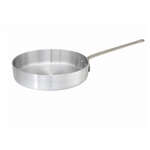
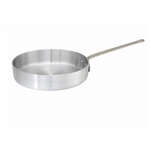
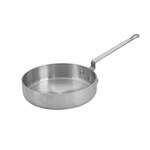
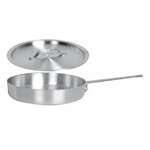
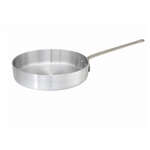
Sauté pans — wide, flat bottoms with sloped sides for quick cooking and tossing ingredients.
Stock pots — tall, narrow construction maximizes liquid capacity while minimizing evaporation.
Braziers — wide, shallow design ideal for browning meats before braising
Rondeau pots — heavy-duty vessels for oven braising with tight-fitting lids that trap moisture.
Professional cooking pans in each category come in multiple sizes to match batch requirements and burner configurations. Equipping your line with appropriate vessel types prevents cooks from improvising with the wrong tools that compromise food quality.